Two Clients, Two Very Different Starting Points, and the Same Result: More Sales
In the last episode we looked at some client results, and this week I want to walk you through two more. These brands started in completely different places, and I think one of them is going to sound like you no matter where you are with Pinterest right now. One came to us with almost no understanding of the platform. The other was already selling on Pinterest but leaving money on the table without realizing it. If you’ve ever wondered whether you need a total overhaul or just a few steady improvements, these two stories show what each path can look like, and why it matters for anyone marketing a business on Pinterest.
Related: This creator made an extra $36k a Month by Doing Less, Not More
Ruby Threads Needed a Full Kickstart
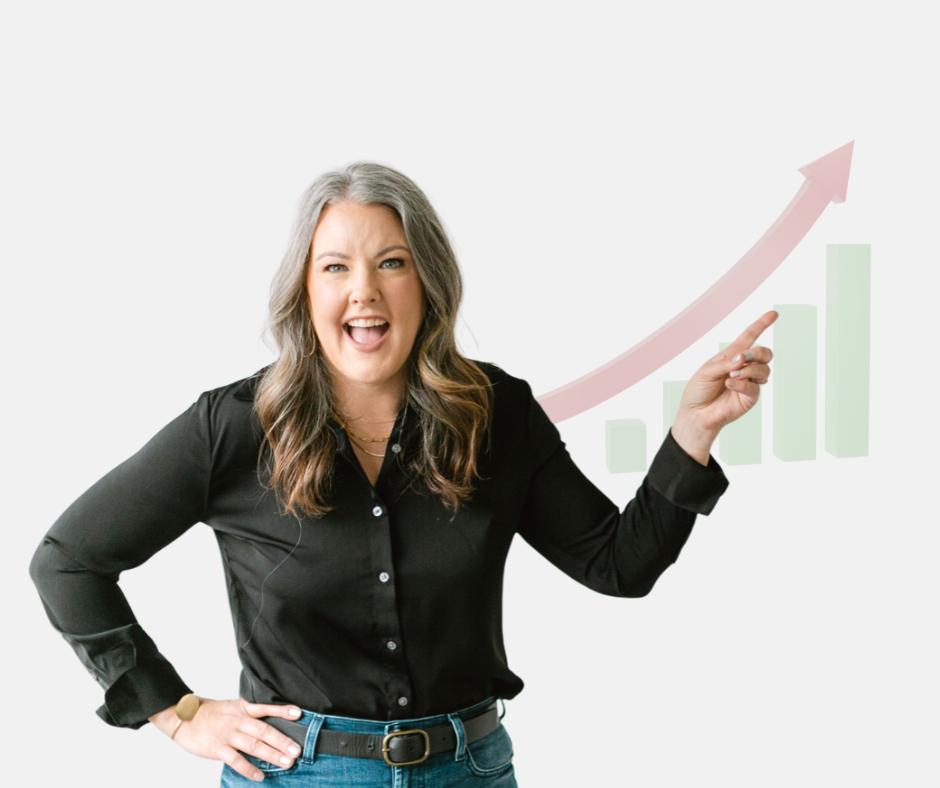
The first client is a fashion brand we’ll call Ruby Threads. They came to us wanting to build brand recognition and finally set up shop to reach their ideal customer on Pinterest, but they had zero understanding of the platform. They had a few boards, no keywording, no branding, and nothing that looked intentional, so they didn’t need a few tweaks. They needed a full kickstart. We began with a deep dive assessment of the account, which matters because someone has often worked on an account three or four years ago and the current team has no idea what’s happening on it. That meant a full analytics report, a look at where their shop could connect, a plan for eye-catching pins, and training one of their team members from the ground up so someone in house really understands the basics. With the foundation built, they could decide whether to add Pinterest ads. Eight weeks later, page visits were up 75%, engagement was up 1,400%, impressions were up 647%, and their total audience had grown by 636%. Results are not typical, since every account, keyword set, and demographic is different. But I can tell you this kind of jump is more common than not, and I would never share it if it were a once in a blue moon outlier.
Sunday Sketch Needed Steady Follow-Through
The second client is an art education e-commerce brand we’ll call Sunday Sketch. They weren’t new to Pinterest and were already selling there, but their products weren’t tagged, and some blog posts and pages didn’t even have Pinterest images made for them yet. They were leaving money on the table without realizing it, and a few tweaks could make a real difference. Instead of an overhaul, this was steady, month-over-month work. Every month we suggested more products they could add and tag properly so their pins could actually convert. It wasn’t flashy and there was no dramatic before and after, but the consistent follow-through paid off right as their busy back-to-school season arrived. Their Pinterest sessions jumped 55% in 30 days after two months of decline. Outbound clicks increased, and conversions went up across the board, including organic ones that had nothing to do with their ads. I also want to point out the seasonality here. Brands often come to us saying they’ve been declining and don’t know why, and while algorithm and AI changes can play a part, when we dig in the pattern is often seasonal. For Sunday Sketch, May and June just aren’t going to be busy.
Related: What’s Working with Pinterest Ads in 2026
Being on Pinterest Is Not the Same as Pinterest Working
Whether you see yourself in Ruby Threads or Sunday Sketch, the same things can help: leveraging your keywords, leveraging your profile, and overhauling your branding. And I want you to hear this one clearly, being on Pinterest is not the same as Pinterest working for you. People tell us they’re on Pinterest, or that someone on their team got them set up, and then ask why it isn’t working. I also talk to business owners who pin consistently, have a shop set up, and technically check every box, yet have no idea if it’s making them money. Activity feels like progress, but a checklist only tells you what got done, not whether it’s working. So ask yourself four things. Do you know what’s supposed to happen after someone finds your pin, or are you hoping they’ll click and buy? Do you know which of your boards or products are actually pulling their weight? Is your account built to be found in search, or does it just look nice? And could you say in one sentence what “working” means for you on Pinterest? If you’re unsure on more than one, you’ve found your gap, and it deserves a closer look.
Related: Are You Getting Caught in this Pinterest Trap?
Where Pinterest Fits When Everything Else Is Up and Down
This is where we’d love to help. Simple Pin Media is a Pinterest marketing agency, and we’ve been doing this for 12 years. In a recent episode I talked about e-commerce brands thinking of Pinterest as a steady workhorse. While Meta, Google, and TikTok Shop go up and down, or demand more and more of your attention, I think you can divert some of your ad spend and time to Pinterest so it becomes a consistent, revenue-producing platform. Is it the sexiest platform out there? No, and it sits way down the list for a lot of marketing teams. But in our client work, once a brand really harnesses Pinterest, it becomes a through line and a stable foundation when everything else is shifting. If you’re an e-commerce brand trying to figure out where Pinterest fits, how to set up your shop, or how to approach ads, book a discovery call with our team using the link below. We’ll look at where the gaps are, how we can support you, and what your goals are. And if you want my quick thoughts on where the industry is heading, make sure you’re subscribed on Apple, Spotify, or your favorite podcast player, because my audio-only Kate’s Take episodes only show up there.
Related: Pinterest Wins: Pinterest Ad Updates and Takeaways
You can find this podcast episode by going to Apple or Spotify.
For More Pinterest Marketing Resources:
- Want help getting Pinterest working for your business? Book a discovery call with Simple Pin Media
- Shop: Create pins for your blog posts and product pages with our Pinterest Templates
- Watch: Mastering Product Tagging on Pinterest
Thanks to our sponsor Lulu for supporting this episode
Here’s what stops most people from ever publishing a book. It’s not the writing, it’s the setup. Building a store, figuring out shipping, wiring up payments. That’s where the idea essentially goes to die, and Lulu just fixed that.
Their new direct to buy button is basically plug and play. Once your book is in your Lulu account, all you need is Stripe, and you’ve got a buy button you can drop right into your website, your newsletter, or anywhere your audience already is. If tech has been the excuse keeping you from writing a book, that excuse is gone.
Check out Lulu using the link below.
Podcast Episode
2 clients, more sales
Full Transcript:
Kate [00:00:00]: I want to say a huge thank you to our sponsor, Lulu, for supporting this episode. Here’s what stops most people from ever publishing a book. It’s not the writing, it’s the setup. The thought of building a store, figuring out shipping, wiring up payments. That’s where the idea essentially goes to die. Lulu just fixed that.
Their new direct to buy button is basically plug and play. Once your book is in your Lulu account, all you need is Stripe, and you’ve got a buy button you can drop right into your website, your newsletter, or anywhere your audience already is. No tech overwhelm, no extra tools, no reason to keep putting it off.
If tech has been your excuse that keeps you from writing a book, that excuse is gone. Learn more about this new setup that Lulu has by clicking on the link below in the description.
Hey there, and welcome back to another episode of The Simple Pin Podcast. Last episode, we talked about some client [00:01:00] results that we were getting.
This episode, I wanna tell you about two clients, because they started in completely different places, and I think one of them is gonna sound like you no matter where you’re at right now. So first up, we have a fashion brand. We’re gonna call them Ruby Threads. They came to us wanting to build brand recognition and finally set up shop to reach their ideal customer on Pinterest.
The problem was they had zero understanding of the platform. They had a few boards, no keywording, no branding, something that looked really unintentional, but they didn’t need tweaks. They needed a full-on kickstart. So that’s what we did. We did a deep dive assessment of the account first so we actually knew what we were working with.
And I wanna say, a lot of times with brands when they come to us, somebody has previously worked on the account. There’s a lot of work that they did, and the new marketing team that takes over doesn’t really [00:02:00] know what’s happening. We hear a lot of, “Well, we touched it three to four years ago,” or, “Somebody worked on it during this time, but we don’t really know what’s going on.”
So in order for us to approach the account well, it’s important for us to do that full deep dive account assessment. What is actually happening? So that’s a full analytics report. We try to see where the shop connections can be integrated, where we can build these eye-catching pins, and then whether we need to train one of their team members, essentially from scratch, from the ground up, so that someone in house really can understand the basics.
And that’s what happened with this brand. So they were able to build all the foundation and then make a decision about whether or not they wanted to integrate Pinterest ads. Now, if they had not done any of this, then they would’ve been playing with [00:03:00] a profile that was out of order, boards that didn’t make sense, a lack of understanding with keywords, and kind of throwing darts, but still asking questions like, “Why isn’t this working?”
So here’s what happened. Eight weeks later, page visits were up 75%, engagement was up 1400%, their impressions were up 647%, and their total audience overall grew by 636%. That’s eight weeks from basically having nothing to everything fully set up. Now, just like any good weight loss commercial, and I’ve said this before, results are not typical.
And the reason I say that is because each account is different. We don’t know how the keywords are gonna play on the platform. We don’t know about the demographic. But I can say this is more common than not. It’s not something that’s an outlier, [00:04:00] and if it was an outlier, I wouldn’t wanna share it with you because then it would make you feel like you could strive towards something that was once in a blue moon, and I don’t ever wanna sell that.
But it’s really important to think about the fact that in just eight weeks, with minor tweaks, with basically pointing the ship in the right direction, this brand is now set up fully to really launch into the next phase. So let’s talk about the second client. This is a different kind of starting point.
It’s an art education e-commerce brand. We’re gonna call them Sunday Sketch. They weren’t new to Pinterest. They were actually already selling on Pinterest, but their products weren’t tagged. Some blog posts and blog pages actually didn’t even have Pinterest images made for them yet. And honestly, for them, it was like they were leaving money on the table without even realizing it.
There were a few tweaks that they could make that could really elevate what they wanted to do on [00:05:00] Pinterest. So instead of this full overhaul model, this was a steady month-over-month type of work. So every month, we’d suggest more products they could add and things that could get tagged properly so that pins could actually convert.
It wasn’t really flashy work. It wasn’t, “This is before, this is after,” but it was consistent follow-through, which is what this brand needed, and it paid off right when it mattered. So heading into their really busy season, which is back to school, their Pinterest sessions jumped by 55% in 30 days after two months of decline.
Now, I wanna note this here because there’s a lot of brands who come to us and say, “We’ve been on the decline. We don’t understand why. We wanna do something different.” And it’s really important to note that a lot of times Pinterest has a real seasonality component to it. Now, that’s not to say that there’s not been algorithmic [00:06:00] changes or impacts to AI, but oftentimes when we dig, we see that the pattern usually holds the same, especially for a brand that’s seasonal.
So that was this brand. Their time is really back to school season, which means June, even May, is not going to get a lot of activity for them. Outbound clicks also increase during this time, which is how we generate more conversions. That’s actual sales that can happen for a brand, and this increased for them totally across the board, including organic ones that also had nothing to do with ads.
So that’s a note. They were also running ads. So here’s why I want you to hear both of these, and maybe you’re Ruby Threads or maybe you’re Sunday Sketch. Either way, I want to name directly some of the things that you can do, and that is really leveraging keywords, leveraging your profile, overhauling your branding, [00:07:00] and really knowing that being on Pinterest is not the same as Pinterest working for you.
And a lot of people will confuse those two things. They’ll come to us and they’ll say, “I’m on Pinterest,” but they’re not actually doing anything strategic. Or, “Somebody on my team got us set up on Pinterest. We’re over there. Why isn’t it working?” And so being on there and actually having Pinterest work for you, it’s not the same thing.
So I talk to business owners all the time who are pinning consistently, have a shop set up, who technically check all the boxes, but they still have no idea if it’s actually working or making money. It’s kind of like activity feels like progress, but it’s not the same thing. A checklist tells you what you got done. It doesn’t tell you if it’s working.
So if you’re wondering whether this is you, here’s what I’d actually ask yourself. One, do you know what’s supposed to happen after somebody finds [00:08:00] your pin? Or are you just hoping they’ll click on it and buy something? Two, do you know which of your boards or your products are actually pulling their weight versus just sitting there? Three, is your account actually built to be found in search, or does it just look nice? And four, if I asked you right now what “working,” quote unquote, means for you on Pinterest, could you answer that in one sentence? Could you say what working looks like? If you got through these four and you are not sure on more than one of them, then you’ve identified the problem. You’ve identified the gap, and it needs to be looked at more deeply.
We would love to help with that. Simple Pin Media is a Pinterest marketing agency. If you’ve listened to this podcast for any amount of time, you know that we’ve been doing this now for 12 years. And just recently, I attended a conference, and I shared with you some of that in my [00:09:00] Kate’s Take episode.
If you are a watcher on YouTube, a viewer, then what you need to know is that within this podcast, I have something called Kate’s Take that is just an audio version, five minutes, this one was 10, of me sharing my thoughts on where the Pinterest marketing industry is going, how it’s affecting certain markets, and it only shows up in podcast players.
So make sure you’re subscribed on Apple or Spotify or your favorite podcast player. In a recent episode, I talked about this awareness that e-commerce brands need to have about Pinterest being a steady workhorse for their brand. While Meta and Google and TikTok Shop are doing all of these things that go up and down, or they feel like they have to devote more of their attention to it, I think there’s a way that you could divert some of your ad spend, some of your time away into Pinterest so that it can be a [00:10:00] consistent revenue-producing platform for you.
Is it the most sexy platform out there? No. It is way down on the list for a lot of marketing teams. But what we see in the client work that we do is that once the power of Pinterest is really harnessed for a brand, it does become this through line that acts as a stable foundation when everything else is going up and down.
If you are an e-commerce brand and you are struggling with trying to figure out how to place Pinterest, how to set up your shop, how to figure out ads, we wanna help support you. You can click on the link down below in the description and book a discovery call with our team. This call is simply to figure out where the gaps are, how we can support you, and what your goals are going forward.
All righty. Thanks so much for listening to the Simple Pin Podcast. If you are not subscribed, go to your player and search Simple Pin Podcast and you will make sure to get the Kate’s Takes episodes so that you don’t miss anything. All righty. Thanks so [00:11:00] much.